Write a Shopify referral message that explains what the customer and their friend receive, the conditions for earning the benefit and the supported referral destination. Ask after a credible product experience and use an appropriate permitted channel. Keep participation optional, then measure qualifying purchases and rewards separately from link clicks or shares.
Key takeaways
Distinguish sharing a link from earning a reward.
Explain the referrer and friend benefits separately.
Let the referral provider establish tracking and reward state.
A referral request asks a customer to put their own reputation behind the store. That makes clarity especially important. They should know what they are sharing, whether anyone receives a benefit and what the friend can reasonably expect after opening the link.
Build the message from the actual referral program rather than starting with an enthusiastic slogan. A useful invitation makes the arrangement easy to understand without pressuring the customer to recruit people or implying a personal endorsement they have not chosen to make.
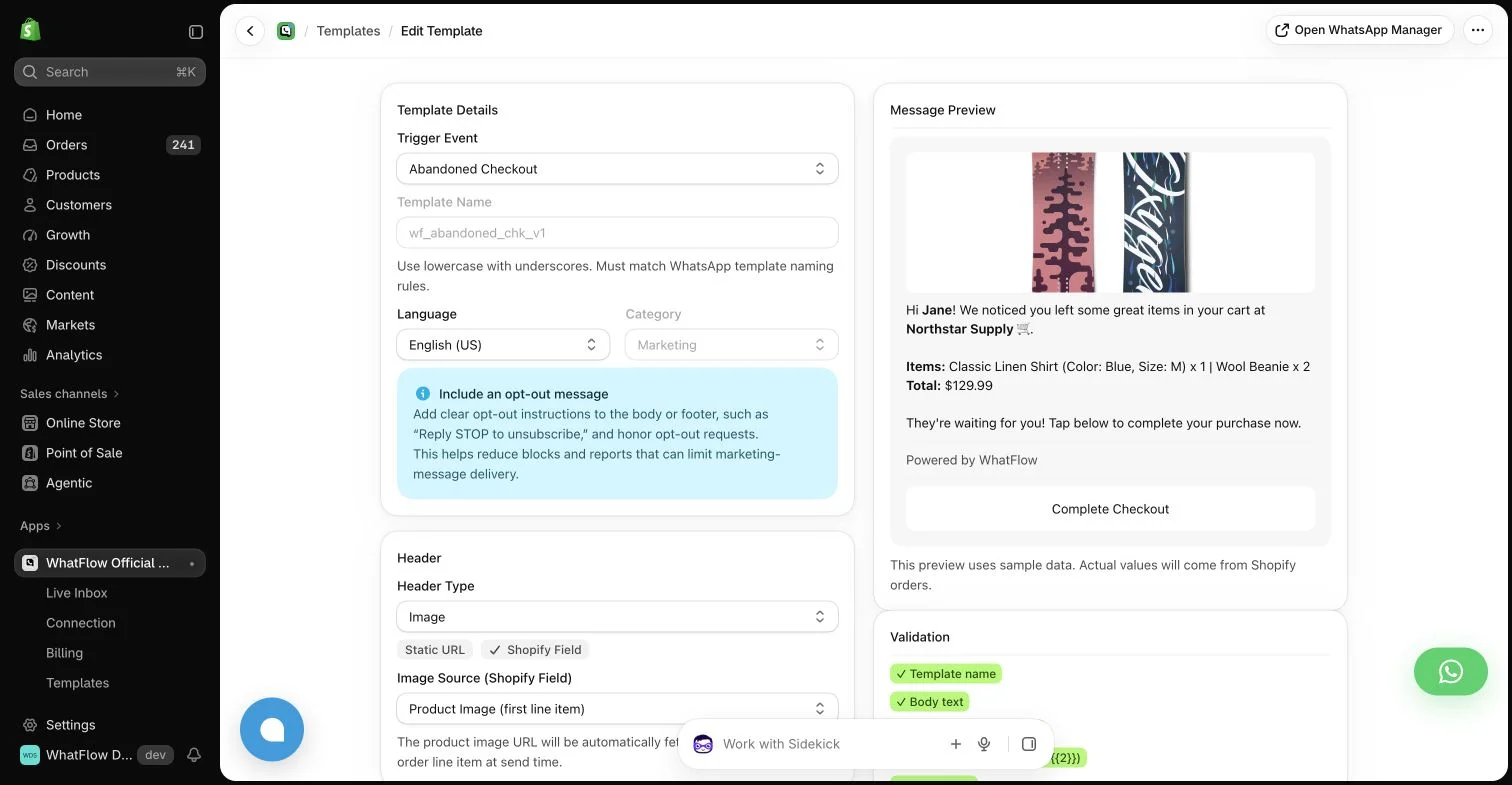
WhatFlow template editor in the demo store. Sample message data illustrates configuration, not a completed send or measured campaign outcome.
Explain the two sides of the offer
State what, if anything, the referring customer receives and what the new buyer receives. Keep the conditions distinct. A reward earned after a qualifying purchase is not the same as an immediate payment for sharing a link.
Use the program’s current terms as the source. If exclusions, minimum spend or a waiting period apply, make the important point visible near the invitation. Do not write a broad promise that the redemption experience later narrows unexpectedly.
Make the shared destination understandable
Open the referral link as someone unfamiliar with the store. Check the offer, products, destination market and any required steps. The friend should not need the original customer to explain why a code is not being accepted.
Use the referral tool’s supported links and tracking rather than inventing a manual attribution scheme that the team cannot maintain. Test the configured journey with controlled data and distinguish test activity from real reward claims.
A customer needs enough experience with the store to decide whether they want to recommend it. An invitation sent before arrival can ask for advocacy before the business has fulfilled the order. Choose a plausible stage and keep unresolved support issues in mind.
Do not assume every satisfied buyer wants to participate. Make the invitation optional and avoid language that turns loyalty into an obligation. A person can enjoy the product without wanting to share marketing messages with friends.
Check the recipient’s channel preferences and the applicable message format. A referral offer may have a different purpose from an order update. For WhatsApp, use the required approved template and eligibility process rather than assuming a previous support chat covers every later campaign.
WhatFlow can support the message and subsequent questions in the team inbox. The referral app remains responsible for its program rules, tracking and reward state. Do not describe WhatFlow as issuing a referral benefit unless the actual configured integration performs that task.
A customer may report that a friend purchased but a reward is missing. Give the team a way to investigate through the provider’s supported records. Do not promise to identify a friend’s private order details or share information that the referrer is not entitled to receive.
Explain the next step and the program’s timing accurately. A shared inbox can keep the conversation accessible to colleagues, but someone still needs responsibility for the case. WhatFlow Business API’s lack of inbox seat fees can help with access without replacing that ownership.
Measure completed participation, not just shares
Link clicks, qualifying purchases and rewards issued are different stages. Use the program’s actual reporting and check how duplicate or self-referral activity is handled. Do not treat every shared link as a new customer or assume that attributed orders are all incremental.
The most durable referral program is easy to explain and dependable to use. A clear message should support that experience, not hide complicated conditions behind a friendly request to tell a friend.
Hypothetical example: a referral program gives the friend a discount on a qualifying first purchase and credits the original customer after that purchase meets the program’s conditions. Draft the two benefits as separate sentences. Include the important minimum spend and waiting condition where applicable. Avoid saying “earn instantly” if sharing alone does not create an earned reward.
Test the friend’s landing page, code conditions and the provider’s resulting status with controlled data. Give support a reference for explaining pending rewards without exposing the friend’s private order information. WhatFlow Business API can carry the eligible invitation and the subsequent question, while the referral app remains the source of reward eligibility. Review qualified purchases and issued rewards before describing the campaign as successful.
Explore WhatFlow Business API for WhatsApp messaging and a team inbox with no seat fees. Features are included across plans, including Free; message allowances and rates differ.
Safwan Adnan is co-founder and CEO of WhatFlow. This guide is published by WhatFlow and includes its product where relevant. Worked examples are illustrative unless a caption identifies an actual demo-store configuration; they are not merchant performance results.
Does sharing a referral link mean a reward was earned?
Not necessarily. Explain the program’s actual qualifying conditions and distinguish sharing, purchase attribution and reward issuance.
Does WhatFlow itself run the referral program?
This guide uses WhatFlow for messaging and replies. Referral rules and rewards belong to the selected provider unless a supported configured action explicitly connects them.