Use customer reviews to find repeated use cases, questions and expectation gaps, then verify the underlying product detail before changing the copy. Translate themes into useful specifications or explanations instead of universal promises. Preserve quotation context and permissions, and update saved support answers whenever the public product information changes.
Key takeaways
Use reviews to find information gaps, not technical guarantees.
Verify dimensions and compatibility before publishing a new claim.
Keep product copy and saved support explanations aligned.
Customers often describe a product differently from the people who sell it. A merchant may emphasize the material, while buyers repeatedly mention that the item fits a particular everyday task. Those themes can improve the product page when they are interpreted carefully.
Use reviews to identify questions and language worth investigating, not as a shortcut to unsupported claims. A few enthusiastic comments do not prove that every customer will have the same outcome. Keep the distinction between customer experience and product specification clear.
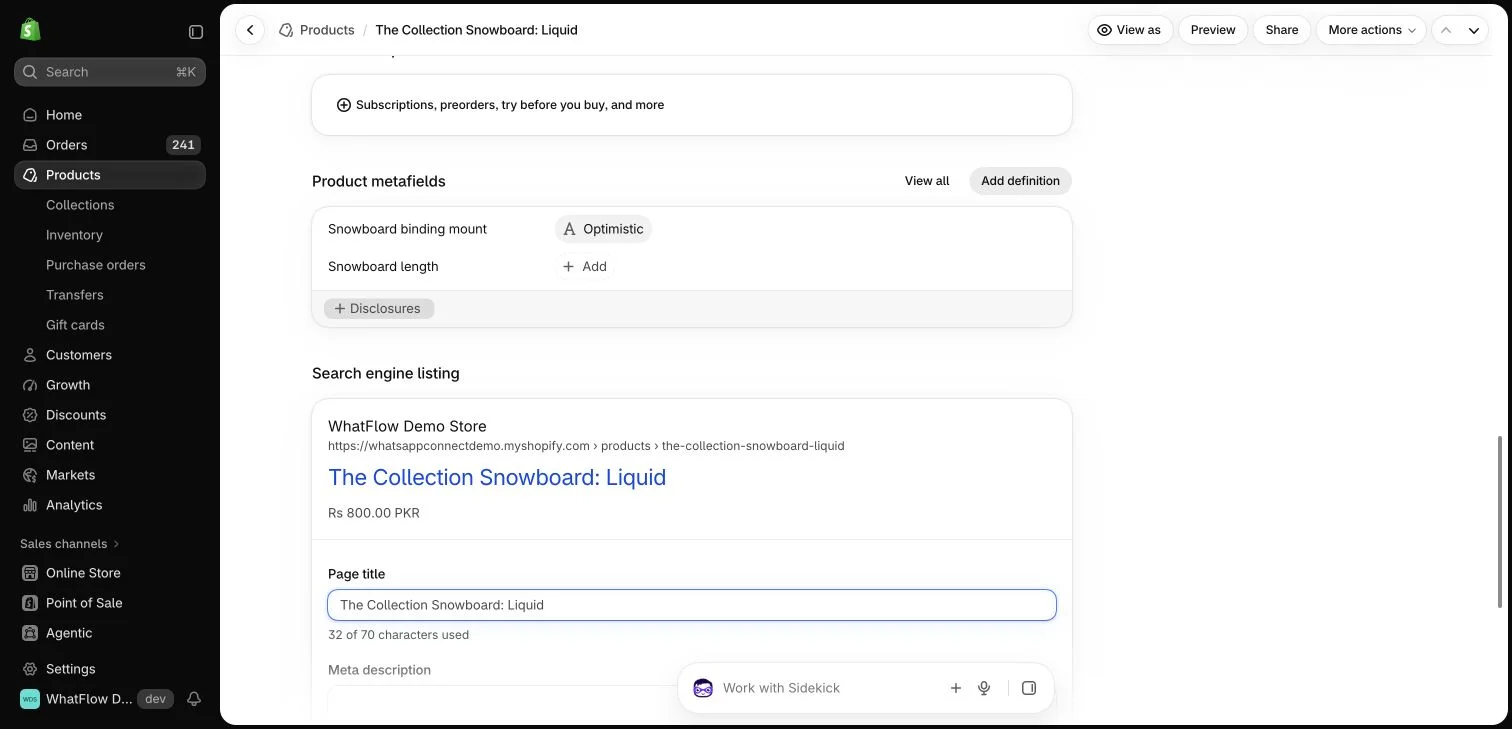
Shopify search-engine listing fields for a demo product. This editor preview does not demonstrate a Google ranking or rich result.
Look for repeated use cases and uncertainties
Read a range of feedback, including criticism and mixed experiences. Note what customers were trying to do, which details helped and what surprised them. Repeated references to size, setup or compatibility can reveal where the current description leaves an important gap.
Avoid selecting only the comments that support the copy you already want to write. The purpose is to learn what the page should explain. A recurring complaint may be more valuable than another adjective praising the product’s quality.
Verify the underlying detail
If several reviewers say a bag fits a certain device, check the actual internal dimensions and any relevant limits before turning that observation into a compatibility statement. A customer may use a different case, product version or interpretation of “fits.”
Use verified product information to write the specification. Then use genuine feedback, with appropriate context, to illustrate experience. This avoids treating one anecdote as a technical guarantee and makes the page easier to maintain when a product changes.
A theme such as “easy to carry” can become a clearer account of handle length, weight and intended use rather than another generic benefit claim. Explain the detail a buyer needs to judge whether the product suits them.
Do not copy a customer’s wording into a testimonial format without preserving its source and meaning. Review text belongs to its author. If the store wants to reuse a quotation or media in another marketing placement, establish the appropriate rights and permissions for that use.
A recurring concern about fit can justify a better measurement guide. Comments about assembly can justify clearer instructions. Improving the description should help set accurate expectations rather than rephrase the concern until it sounds positive.
Keep authentic reviews available under the provider’s supported moderation process. A revised product page does not make earlier customer experience invalid. Where a product version has changed, provide context so shoppers can understand which feedback applies to which version.
Align public copy and support answers
Share the revised explanation with the people handling customer questions. Update saved replies and relevant help pages when the factual answer changes. Otherwise the store can publish a useful correction while continuing to send the older description in private messages.
WhatFlow’s team inbox can help surface the questions customers still ask after the page update. Summarize those themes without duplicating private details. The feedback loop should improve the public information, not create another archive of personal conversations.
Turn remaining repeat questions into useful product FAQs alongside the revised description.
Review whether the change solved the question
Watch new feedback and support questions about the same topic. Compare with sales volume and product changes rather than assuming fewer messages prove the copy caused a better outcome. A useful improvement may also make a limitation clearer and help an unsuitable buyer decide not to order.
That is still a good product-page outcome. Clear copy should attract appropriate purchases and reduce avoidable surprises. Writing from customer insight works best when the store preserves honesty, verifies the facts and makes the reader’s decision easier.
Convert a review theme into a verifiable sentence
Hypothetical example: several bag reviews say a laptop fits comfortably. Before adding a compatibility claim, measure the usable compartment and check the relevant device dimensions, including cases where necessary. Replace a broad “fits every laptop” statement with the actual compartment measurements and any verified limits. Customer experience can illustrate the point without becoming a guarantee for every device.
Keep a change record with the review theme, verified specification and final sentence. Update the compatibility reply used by the support team on the same day. Then review later questions about fit and the versions customers mention. WhatFlow Business API’s inbox can help identify unresolved questions, but the published copy should stand on maintained product facts rather than a private conversation alone.
Before you put this into practice
Sample mixed and critical feedback as well as praise.
Verify the product fact behind the proposed sentence.
Update the matching support answer and review later questions.
Explore WhatFlow Business API for WhatsApp messaging and a team inbox with no seat fees. Features are included across plans, including Free; message allowances and rates differ.
Safwan Adnan is co-founder and CEO of WhatFlow. This guide is published by WhatFlow and includes its product where relevant. Worked examples are illustrative unless a caption identifies an actual demo-store configuration; they are not merchant performance results.
Can a repeated review comment become a product specification?
Verify it against reliable product information first. Customer experiences can suggest a useful question, but do not automatically establish a universal technical claim.
Can I reuse review text anywhere on my site?
Preserve context and attribution and establish the rights or permission required for the intended use. Reviews belong to their authors.