Plan a small-store influencer campaign by matching the creator’s audience to a concrete product use case, agreeing the deliverable and preparing the destination before publication. Verify claims, offer conditions and reuse rights, then brief support on likely questions. Measure visits, qualifying purchases and total campaign costs with clear attribution limits rather than relying on reach alone.
Key takeaways
Assess product and audience fit before follower count.
Test the specific destination and offer before publication.
Include samples, fees, discounts and support effort in costs.
A creator’s audience can be large without being a useful audience for your store. A campaign starts to make sense when the product, the content and the viewer’s next step fit together. Reach is a distribution measure, not proof that the recommendation will help someone buy appropriately.
Start with a specific customer task and a realistic campaign scope. Decide what the viewer should learn, where they should go and what the store must be ready to explain. The creative should connect to an experience the business can actually deliver.
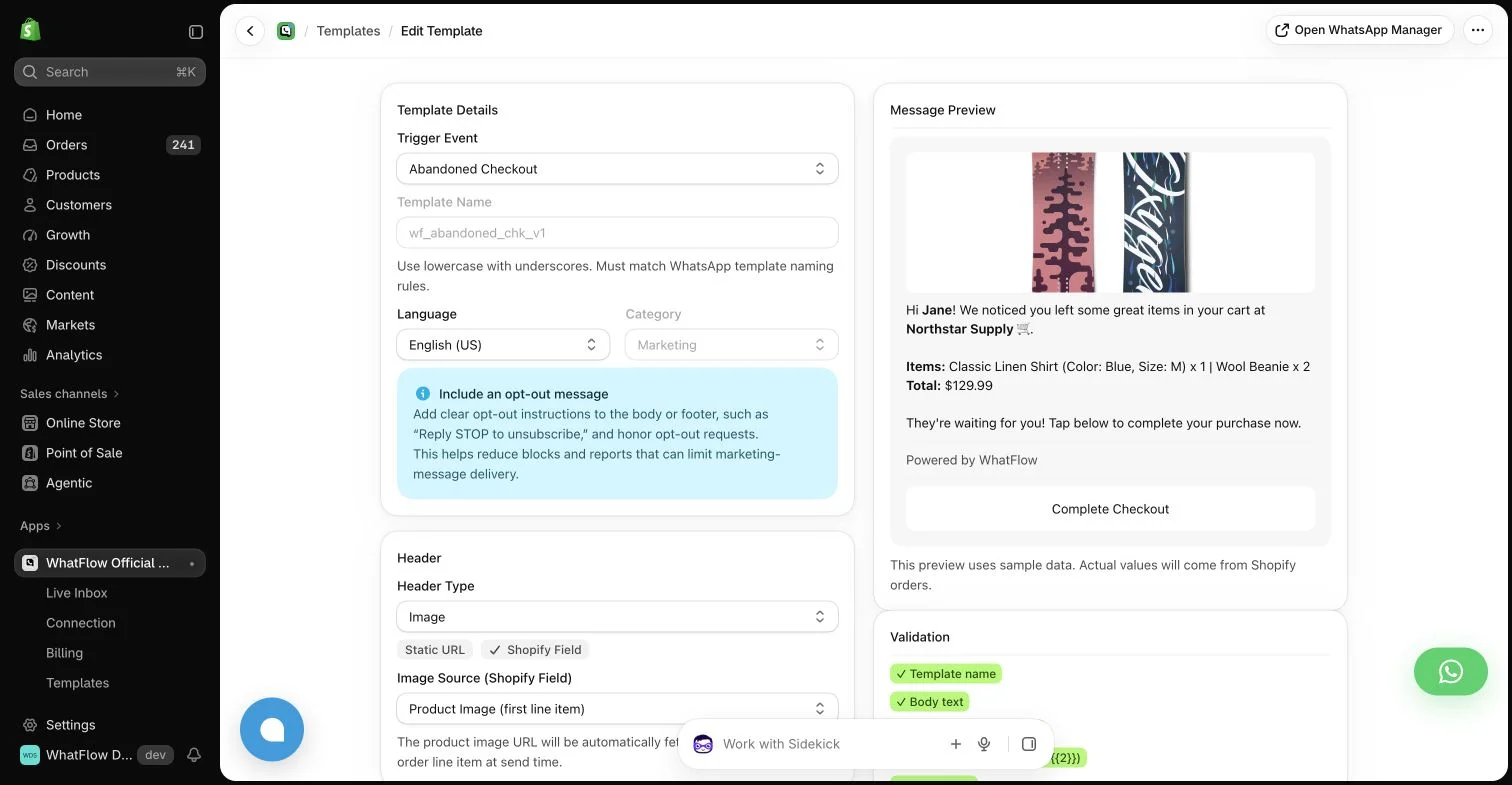
WhatFlow template editor in the demo store. Sample message data illustrates configuration, not a completed send or measured campaign outcome.
Check audience and product fit
Review the type of content the creator normally makes and the questions their audience asks. A recommendation should fit a plausible use case rather than rely only on follower count. Do not infer sensitive personal characteristics about individual viewers from a broad audience description.
Use accurate product information when discussing fit with the creator. A compelling demonstration cannot substantiate a capability the product does not have. Keep important compatibility and usage limitations available before the content is produced.
Define the format, publication window, destination and any agreed review process. Clarify the rights associated with reusing the material in your own marketing. Receiving a video file does not automatically establish permission for every future advertisement or edit.
Keep factual review separate from controlling an independent opinion. The store can correct a wrong specification without manufacturing a customer testimonial. Any required sponsorship or commercial disclosures should follow the applicable platform and campaign rules.
Open the linked page on a phone and check the product, price, stock and offer conditions. The viewer should find the item the content described, not a generic homepage requiring another search. If the campaign uses a code, test the actual checkout conditions.
Add the product questions the campaign is likely to create. A short specification or use guide can help more people than expecting every interested viewer to start a conversation. Keep the page consistent with the claims made in the creator’s content.
Tell the support team what is being published and which offer applies. Give them a route for compatibility, delivery and product questions. A campaign can create demand for answers as well as demand for purchases.
WhatFlow’s theme-fitting WhatsApp buttons and team inbox can provide an appropriate conversation route. Set realistic response expectations and use supported message formats for any follow-up. A viewer opening a product page is not automatically eligible for every outbound marketing message.
Measure with clear attribution limits
Use the reporting your campaign setup supports and distinguish views, visits, code use and attributed purchases. A shared code may reach people outside the creator’s audience. A click may not identify every later purchase, and an attributed order is not necessarily incremental.
Review cost and margin as well as order value. Include product samples, agreed fees, discounts and operational work in the campaign assessment. Avoid announcing a universal return figure from one small or unusually timed campaign.
Keep the learning specific
Record which audience question the content answered, how the destination performed and what support themes appeared. If the campaign attracted unsuitable buyers, improve the explanation rather than merely seeking more reach. If the destination failed, fix it before repeating the promotion.
A useful creator partnership makes a real product easier for the right person to understand. Its value depends on credible content and a coherent shopping experience, not only on how many people saw the post.
Build a one-page creator campaign brief
Hypothetical example: a travel-accessory store works with a packing creator to demonstrate an organizer’s actual capacity. The brief names the product version, verified dimensions, intended use, destination page and publication window. Record any agreed reuse rights separately from delivery of the video file. The creator should have the facts needed to avoid implying that every bag or device will fit.
Open the destination on a phone and check stock, selected variant, campaign code and the questions raised by the demonstration. Give support the same brief before publication. WhatFlow Business API’s theme-fitting WhatsApp entry point can provide a conversation route for shoppers who need a detail confirmed. Afterward, compare the defined costs and attributed purchases while reading support themes that reveal missing or misleading information.
Explore WhatFlow Business API for WhatsApp messaging and a team inbox with no seat fees. Features are included across plans, including Free; message allowances and rates differ.
Safwan Adnan is co-founder and CEO of WhatFlow. This guide is published by WhatFlow and includes its product where relevant. Worked examples are illustrative unless a caption identifies an actual demo-store configuration; they are not merchant performance results.