Define your store audience around a practical customer task, then choose a promise the product and operation can substantiate. Show the details that help a suitable buyer assess fit, including relevant limitations. Check that product pages, support answers and fulfillment reinforce the same promise, and revise it when actual feedback reveals an expectation gap.
Key takeaways
Describe the customer’s task without inventing a personality profile.
Back the store promise with verifiable product or service details.
Use support questions to detect an overbroad promise.
A brand promise becomes useful when it helps the right buyer understand why the product suits them. It becomes fragile when it describes an experience the store cannot consistently deliver. Start with the customer task and the evidence behind the offer rather than a list of impressive adjectives.
A focused audience does not mean inventing a detailed personality for every visitor. It means understanding a set of needs the business can serve well. Product information, support and fulfillment should reinforce that understanding after the marketing message has attracted attention.
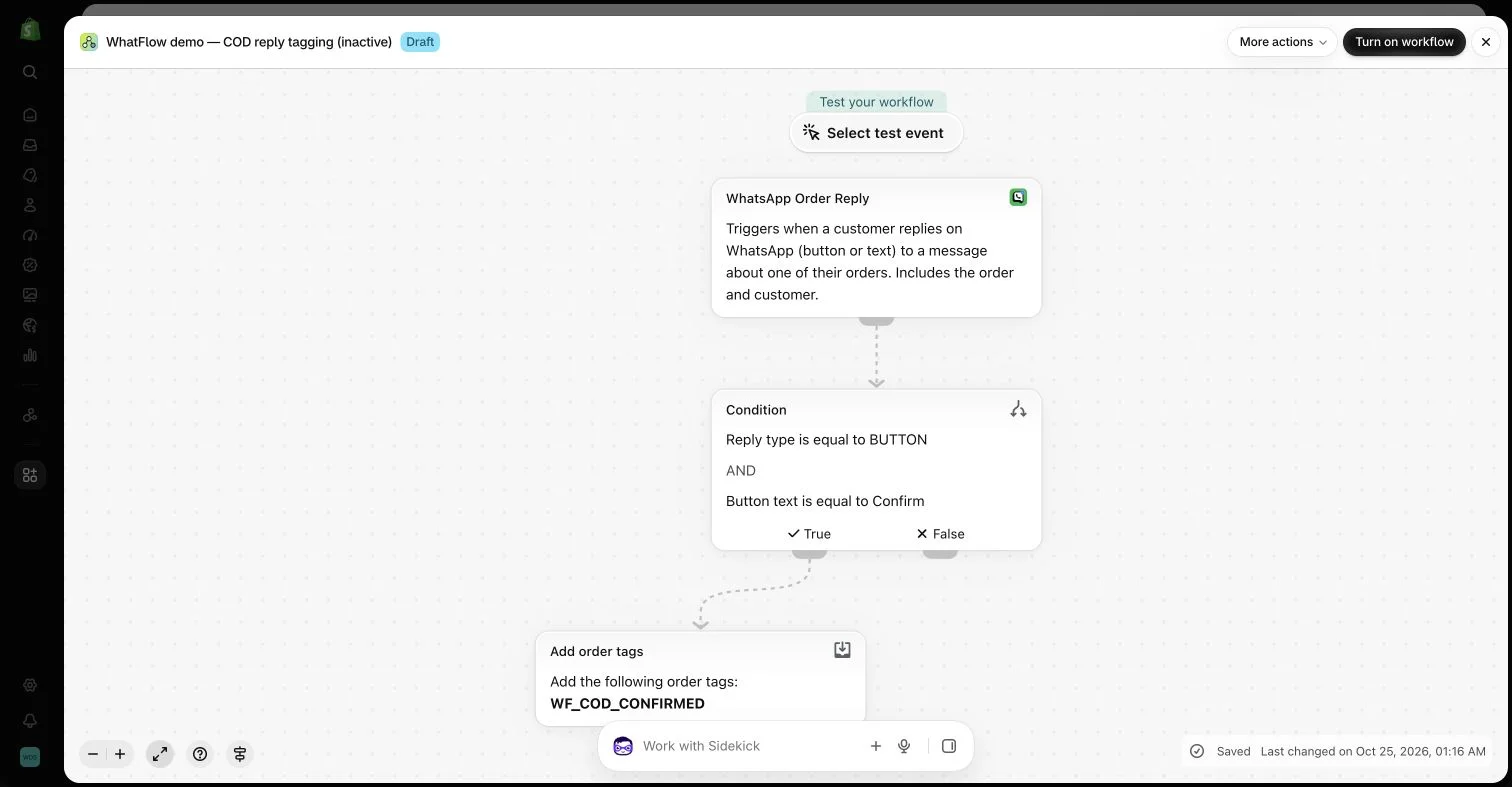
An inactive workflow in the WhatFlow demo store illustrates order-reply configuration. No customer messages or order changes were made.
Describe the job the customer is trying to complete
Identify the practical situation the product addresses. A meal container for a commuter, a refill for an existing dispenser and a gift for a particular occasion involve different decisions. Use language that explains the task without claiming personal knowledge about the buyer.
Read recurring questions and feedback to test the assumption. A store may position a product around one benefit while customers repeatedly discuss another. That evidence can improve the explanation without proving that every buyer shares the same motivation.
Test audience assumptions through a customer feedback loop rather than a fictional persona alone.
Choose a difference the business can substantiate
A useful distinction may concern fit, materials, service or a specific use case. Explain the detail behind it. “Designed to fit these dimensions” is more informative than “perfect for everyone.” Avoid certifications, performance claims or sustainability statements the business cannot support.
If the promise depends on an operational process, check that process. A brand built around dependable communication needs a monitored help route and accurate updates. A slogan about customer care cannot substitute for ownership of unresolved conversations.
Connect the promise to the product page
Show the specifications, images and relevant customer feedback that help the reader evaluate the claim. Preserve review source and context rather than selecting a quotation that implies a broader guarantee. Keep limitations visible where they affect suitability.
The page should also help an unsuitable buyer make the right decision. A clear compatibility boundary can prevent an avoidable return. Good positioning is not simply more persuasive wording; it helps the right customer recognize a credible fit.
Support answers should reflect the same facts as the public page. If a colleague needs to explain an exception repeatedly, the original promise may be too broad. Update the page and the saved replies together rather than teaching the team to apologize for the same mismatch.
WhatFlow’s Shopify-oriented WhatsApp entry points and shared inbox can support that conversation. The team still needs accurate product knowledge and realistic response expectations. A convenient channel helps deliver the promise only when the underlying service is ready.
Build content around the audience’s real questions
Choose guides that help with selection, use and care. Avoid expanding into unrelated subjects merely because they appear in a competitor’s archive. A useful library should make the store’s expertise easier to understand, not make every possible keyword look like part of the brand.
Use original examples and distinguish them from real customer stories. Do not turn another company’s interview or growth result into evidence about your own store. A clear first-party explanation is more credible than borrowed authority presented without context.
Look at support themes, returns and reviews after the message has been in use. Ask whether customers understood the offer and whether the team delivered the experience the copy described. Keep the underlying counts and limitations visible.
Refine the promise when evidence shows a mismatch. A focused brand can grow without pretending to serve every need. Its strongest foundation is a product and customer experience the business can explain, maintain and improve through ordinary operational work.
Replace a broad promise with a testable fit
Hypothetical example: a lunch-container store begins with “perfect for every busy day.” Narrow the promise to a specific commuter use case, then verify the container dimensions, capacity and care requirements that matter to that task. Show those details beside suitable product images. A buyer carrying a smaller bag should be able to recognize the limitation before ordering.
Write the same factual explanation into the product page, relevant buying guide and support reply. Review questions about fit after publication and check whether customers still misunderstand the offer. WhatFlow Business API can give shoppers a convenient Shopify-oriented WhatsApp route to ask those questions; the positioning becomes credible when the team’s answer and the delivered product agree with the page.
Explore WhatFlow Business API for WhatsApp messaging and a team inbox with no seat fees. Features are included across plans, including Free; message allowances and rates differ.
Safwan Adnan is co-founder and CEO of WhatFlow. This guide is published by WhatFlow and includes its product where relevant. Worked examples are illustrative unless a caption identifies an actual demo-store configuration; they are not merchant performance results.