Test product-page social proof by changing one defined element, choosing the outcome and denominator in advance, and comparing suitable visitor groups where your tools allow. Keep every version truthful and inspect mobile behavior during the test. Report counts and limitations; before-and-after movement or extra review clicks alone cannot establish that the placement caused more purchases.
Key takeaways
Define the page change and outcome before reading results.
Use comparable groups and truthful content in every version.
Report inconclusive findings and confounding conditions plainly.
It is easy to say that reviews improve conversion. It is harder to establish what a particular placement changed in your store. Traffic quality, promotions, stock and seasonality can all move purchase outcomes while you are adjusting the page. A useful experiment starts by deciding what you want to learn.
Choose a specific question: does making relevant product feedback easier to find help this group of shoppers complete a purchase? That is more testable than “make the store look more trustworthy.” Keep the page change narrow enough that the result can guide a practical decision.
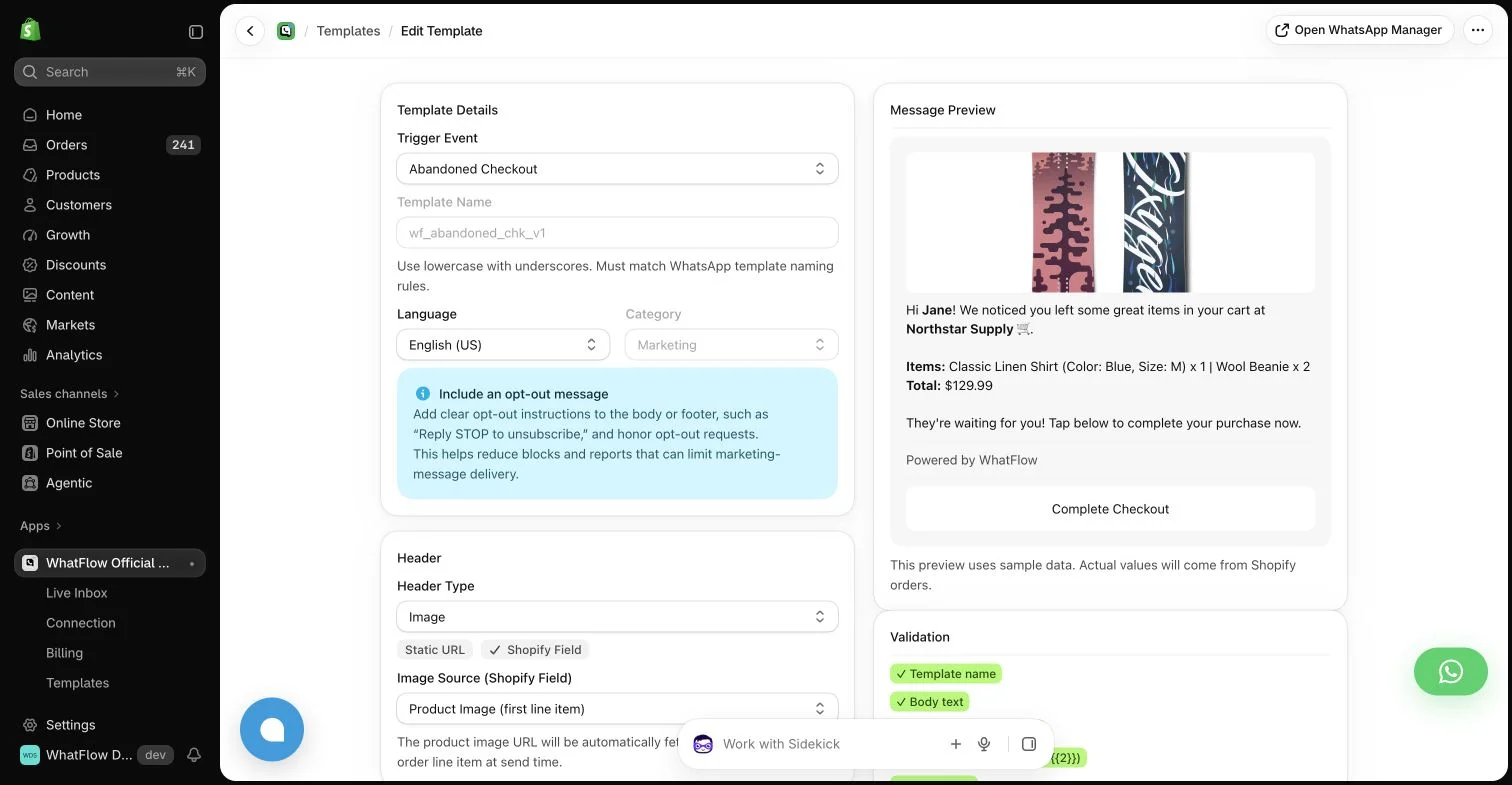
WhatFlow template editor in the demo store. Sample message data illustrates configuration, not a completed send or measured campaign outcome.
Define the change in concrete terms
Record exactly what will differ. You might move a review entry point closer to the product details, add a clearly labelled feedback section or improve access to photo reviews. Avoid changing price, photography, copy and review placement together if you want to understand the placement itself.
Use authentic content tied to the correct product. An experiment does not justify inventing testimonials or presenting store-level praise as a verified product review. The page should remain accurate in every version, including its review source and the meaning of the visible rating.
Completed purchases may be the primary commercial outcome, but additional measures can help interpret the journey. Review-section interactions, product questions, returns and support contacts can reveal whether the change provided useful information or simply attracted attention.
State the denominator and time period for each measure. A higher number of review clicks can result from more visitors rather than a better placement. Keep counts alongside percentages, and make sure the same event definitions apply throughout the comparison.
Prefer a controlled comparison when available
If your experimentation tools support a suitable split, use comparable visitor groups and keep the assignment consistent. Confirm that the test implementation does not break the widget or expose one group to an incomplete page. The experiment itself should not introduce a new performance or usability problem.
When a proper split is unavailable, a before-and-after observation can still be useful, but describe its limits. Note promotions, traffic-source changes and inventory issues. A change observed after the edit is not automatically caused by the edit.
Consult the Judge.me widget reference for supported widget types and storefront placements, then inspect what your configured page actually displays.
Give the sample enough time and context
A few purchases can produce a large-looking percentage difference. Avoid declaring success from the first small movement. Consider the store’s normal traffic and purchase cycle, and use an appropriate analysis method rather than inventing a universal sample size for every merchant.
Inspect the underlying experience during the test. A broken link or mobile overlay can explain a result more directly than an elaborate theory about trust. Check that the review content and product availability have not changed in ways that make the two versions difficult to compare.
Read the conversations as supporting evidence
Pre-purchase questions can reveal whether shoppers still lack information. If people continue asking about fit despite visible reviews, the content may not answer that question. If a photo review helps explain scale, the team may hear fewer of those particular questions.
WhatFlow can provide a WhatsApp help route and a shared inbox for those conversations. Treat the messages as qualitative evidence rather than proof of a numerical uplift. The customer’s words can explain a hypothesis that the experiment should then evaluate more carefully.
Document the change, dates, audience, counts and limitations. If the result is inconclusive, say so and explain what you would test next. A modest, reproducible finding is more useful than a dramatic percentage no one can recreate.
The purpose of testing is to choose better information and presentation for your shoppers. Keep the page truthful, the measurement consistent and the conclusion proportional to the evidence. That approach remains useful even when the first experiment does not produce a clear winner.
Write a test card before changing the widget
For a hypothetical test, change only the location of a review entry point. Record the existing and proposed positions, the eligible product pages, the primary purchase measure and any supporting review-interaction events your tools reliably capture. Keep the review content, pricing and offer consistent where practical. Name the checks that would stop the test, such as a broken mobile purchase control or a widget failing to load.
At review time, compare raw visitor and purchase counts alongside rates, and note stock or traffic changes. If one version has more review interactions but no clear purchase difference, describe that finding precisely rather than declaring an uplift. A small sample may remain inconclusive. Use WhatFlow conversations as qualitative context: repeated questions about scale may suggest that the next experiment should improve useful photo context instead of moving the same star summary again.
Before you put this into practice
Keep a dated record of the page variants.
Check purchase controls on mobile.
Document counts, assignment method and relevant stock changes.
Explore WhatFlow Business API for WhatsApp messaging and a team inbox with no seat fees. Features are included across plans, including Free; message allowances and rates differ.
Safwan Adnan is co-founder and CEO of WhatFlow. This guide is published by WhatFlow and includes its product where relevant. Worked examples are illustrative unless a caption identifies an actual demo-store configuration; they are not merchant performance results.
Can I claim a conversion uplift from a before-and-after comparison?
Describe the observation and its limitations. Other changes can explain the difference, so a before-and-after result alone does not establish causation.
What if the experiment is inconclusive?
Record that outcome honestly. Review implementation and sample limitations, then choose a narrower question or a better comparison.