Choose an ecommerce platform by testing the purchase, support and post-purchase workflows your business needs, under realistic team and budget constraints. Compare required app connections, ongoing maintenance and data portability alongside storefront features. A representative pilot with an exception case will reveal practical gaps that a feature checklist or app-directory count can miss.
Key takeaways
Define essential customer tasks before comparing platforms.
Test the installed app connection and its required data.
Include maintenance and migration effort in the decision.
A platform comparison is easier to understand when it begins with the store you intend to operate. A business selling a small catalog of physical products may need different workflows from one managing complex subscriptions or an established retail operation. A generic feature winner does not answer every merchant’s question.
Define the customer journey and the team’s practical needs before comparing providers. Use current official documentation and a realistic trial of the shortlisted setup. Platform features, plan restrictions and app capabilities can change, so treat this guide as a decision framework rather than a dated feature checklist.
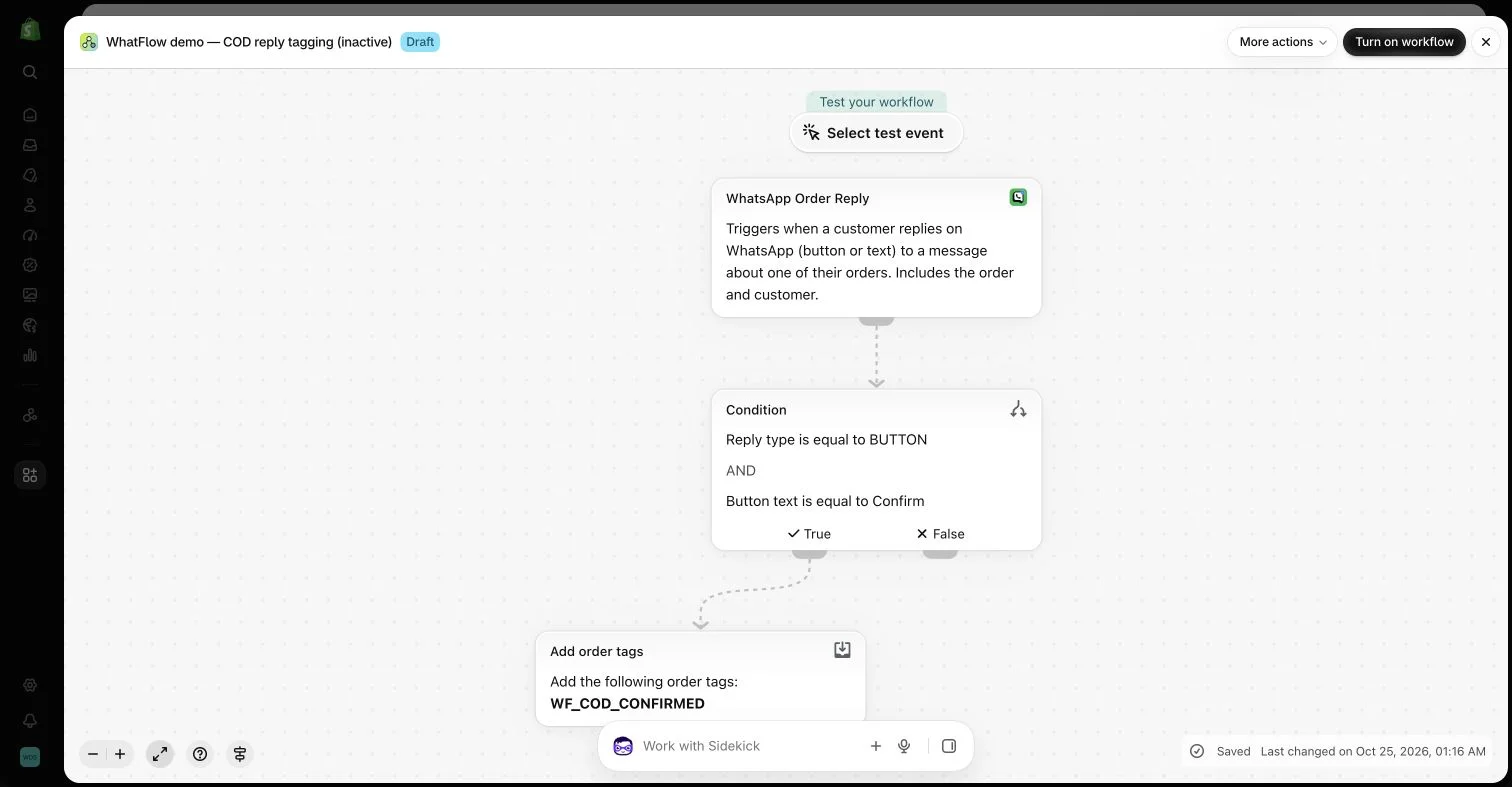
An inactive workflow in the WhatFlow demo store illustrates order-reply configuration. No customer messages or order changes were made.
Describe the complete purchase
List the product types, variants, destinations and payment requirements that matter to the business. Include the information buyers need before ordering and the updates they need afterward. A platform should support the actual transaction, not only an attractive product-page demonstration.
Note the exceptions too: preorders, split shipments, returns or another process central to your model. A workflow used every day deserves more attention than a feature you may never need. Keep essential requirements separate from optional ideas.
Review who will maintain the store
Consider the team’s time, technical experience and access to help. A setup that offers extensive flexibility may also require ongoing maintenance the merchant did not budget for. A more managed environment may reduce some tasks while imposing other limits.
Do not treat either arrangement as universally better. Identify who updates the site, investigates errors and changes integrations. The useful choice fits the team that will run the business after the launch project is finished.
Test the app workflow, not just the app directory
A large ecosystem creates options, but every required connection still needs verification. Check the actual installed tasks, data and plan requirements for your review, messaging and support journey. An integration label does not establish that every relevant capability is available.
WhatFlow is built around Shopify, including tightly integrated messaging features and compatible Flow tasks. That is relevant when Shopify is the chosen platform. It should not be presented as a promise that the same native experience exists on every other ecommerce system.
The Shopify Flow overview provides the relevant workflow baseline when evaluating Shopify-based connections.
Compare the full commercial model
Include the platform plan, applicable transaction costs, required apps and the time needed to maintain the setup. Use the same workload and must-have capabilities across options. A low starting subscription can become less attractive when the essential workflow requires several additional services.
For Shopify messaging, WhatFlow Business API includes features across plans and no inbox seat fees, with allowances and rates differing. Other providers and platforms have their own terms. Check the current pricing and contract details before making a purchase decision.
Identify products, customers, orders, reviews and content that need to move. Check supported exports and imports, and preserve source and verification context where it matters. A successful row count is not proof that the destination represents every record accurately.
Review links, printed QR codes and customer-facing message destinations before switching. A platform migration affects more than the storefront theme. Keep a controlled recovery path and avoid deleting the previous setup until the relevant journey has been checked.
Use a realistic pilot to make the decision
Run representative products and controlled orders through the shortlisted workflow. Include a customer question, an exception and a mobile purchase. Record the gaps and the work required to close them rather than judging only the cleanest demonstration.
The right platform is the one that supports a coherent, maintainable business under its actual terms. A careful comparison should make the tradeoffs understandable. It should not need a universal winner or an unsupported promise about every future requirement.
Use one customer scenario across the shortlist
Hypothetical example: a two-person accessories store needs a buyer to choose a compatible variant, ask a question, receive tracking and later submit a review. Run that same scenario on each shortlisted setup. Add one exception, such as a split shipment, and record who investigates it. Use the actual people and tools expected to maintain the store after launch.
For each stage, mark whether the platform supplies the capability, a supported app completes it or custom work is required. Then attach the relevant subscription and maintenance assumptions. If Shopify is selected, WhatFlow Business API can provide Shopify-oriented WhatsApp messaging and a shared inbox. Keep the review provider and any other connected services in the total rather than assuming the messaging app completes every stage.
Explore WhatFlow Business API for WhatsApp messaging and a team inbox with no seat fees. Features are included across plans, including Free; message allowances and rates differ.
Safwan Adnan is co-founder and CEO of WhatFlow. This guide is published by WhatFlow and includes its product where relevant. Worked examples are illustrative unless a caption identifies an actual demo-store configuration; they are not merchant performance results.